Are You an Online Marketer or Just an SEO?

At SES London, Mike Grehan headed up an Orion Panel with Jill Whalen, Brett Tabke, Chris Sherman, Kevin Ryan and Rand Fishkin. The panel was taking a look at “SEO Where To Next”. I’m not going to rehash what went on at the panel, if you’d like a run down Paul Madden did a good summation of it. What I am looking to discuss is our roles, are we just SEO’s, PPC practitioners or affiliate marketers, or, are we online marketers?

What prompts me in asking this, is how in the past 2 years the rise of “Web 2.0” (I really hate that term) has begun to affect how people consume content, media or anything on the web. Focusing on just SEO, PCC or even Affiliate Marketing, we tend to rely very heavily on the search engines. Heck, we live, die and cry by what Google does. Take a look at the announcement by Matt Cutts about the canonical tag, the search marketing world went nutz!

But what happens when more and more surfers on the internet stop using the typical search engines to find what they need? Confused? Let me explain.

With the advent of the iPhone and its open application system, you no longer need to go to Google to find a nearby restaurant. That’s right, iPhone users have a bevvy of applications that connect them to the internet without a browser and without going to Google and getting a map with a list of restaurants. OpenTable will tell you which restaurants near you have available seating, Urban Spoon does just about the same thing.

It’s not just the iPhone either, AccuWeather just launched a nice little widget much better than than the dreaded desktop “WeatherBug” app(that adds those dreaded tracking cookies that Norton catches). Through the slick Adobe Air backend, AccuWeather tells me my weather without opening a browser and typing in “Weather 19468”. There’s also a nice AdobeAir Application called Tweetdeck to help you manage Twitter, never having to connect to a browser to hold a relevant conversation.

Facebook and Myspace both have phone applications for iPhone, Blackberry or just about any smart phone out there. It’s becoming easier and easier to connect to the internet and the sites you want, and to find the things you want without using a browser or even a search engine.

So with that in mind, I posed this question to the panel. With the ability to connect to the internet w/o a browser, is it the SEO’s job to still work with these types of applications? Only one panel member answered, bravely, Rand Fishkin said he didn’t believe this was the SEO’s job.

I agree, to a point. If you define yourself as an SEO who just optimizes web pages or websites, then yes, he’s right.

But if you have an eye on the future of marketing and are seeing what new technologies are emerging and being embraced in our world, I have to disagree with Rand, in that, that view is really limiting. Businesses are going to have to embrace moving even beyond just the typical web page for an online presence. Search Engines aren’t just browser based anymore, the OpenTable application demonstrates that to a “T”. As responsible online marketers, we have to look beyond just websites and Google, we have to look at the entire online presence, and move beyond the thought that SEO means web based search engines because it doesn’t. So are we SEO’s or Online Marketers, or perhaps both? I guess in the end its how you define “SEO”.

That leads me to wonder this question, is the holy grail of search – the “Google Killer”, just going to be the inevitable change of end user habits? Interesting thought isn’t it? 🙂

Local SEO Tip: Leveraging Categorizations To Promote Your Small Business

Many small businesses still rely upon their yellow pages listings to some degree for business referrals. A business’s listing data is not only found online in the internet yellow pages, but that same data feeds into the local search engines like Google Maps, Yahoo! Local, Live Local Search, and a myriad of other directory sites and local info sites.

A really simple way to increase your small or medium business’s (“SMB”s) exposure on the internet is to insure that your business listings are associated with as many apropos categories in online directories as possible.

While it seems a no-brainer, many SMBs neglect to check how various online sites have categorized them, and as a result get ineffectively and insufficiently displayed throughout the internet.

Back when I worked for a major online yellow pages company, I recall how one of our data aggregators had attempted to automatically categorize a great many non-classified establishments by using words in the business name. While this worked to some degree, a bunch of businesses were put into the wrong category. For instance, they’d shoved all businesses with the word “garden” in the name into “Garden & Lawn Supply” categories, but there are a lot of restaurants with names like “China Garden” that got lumped in with them!

So, today’s Local Search Engine Optimization Tip is easy: go out to the top online directory sites such as Superpages.com, Yellowpages.com, Yellowbook.com, Google Maps, Local.com, Yelp.com, DexKnows.com, Yahoo! Local.com, and any others you’d expect to find your business in, claim your listing(s), and check to see if they’re in the proper business categories!

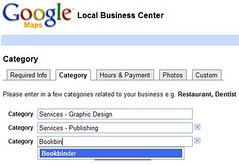
Choosing Categories in Google Local Business CenterMany internet yellow pages allow you somewhere on the order of five category associations for free, so you should be able to update and enhance your listing in these services for free.

Try not to limit yourself to just two categories — if the directory site has a rich taxonomy, you may be able to find a number of categories that are exactly right for you business.

Imagine, if your company is only in one category and/or a wrong category, just by fixing this business categorization you could increase your referral rate by a few times over!

Social Media Optimisation – SES London 2009

being socialAnother panel I presented on at SES London 2009 which took place this past week was Social Media Optimization. I had the fine pleasure of presenting with Jennifer Laycock of Search Engine Guide, Lisa Ditlefsen who’s recently launched her own company Verve Search, and Krista Neher of Marketess. I think it was the only panel at SES that was completely female dominated! Besides that, our panel seemed to flow rather nicely with each of us covering different aspects of social media.

I took the lead in presenting the basics that build social media. From how it rose to be a power that consumers now have, to defining your goals before you start, I covered a basic foundational structure of what social media is. The two main points I really wanted to stress is that 1) it’s all about the end user and 2) social media is a source of new signals about relevancy for the search engines. Beyond covering the basics of strategy and goal setting when it comes to social media, I demonstrated how someone used these aspects with phenomenal success, that person being the new president of the United States, Barack Obama.

Next to the podium was Jennifer Laycock who reinforced my presentation that it’s about the conversations with the end users. From there Jennifer talked about a few social media sites that could be part of any social media strategy. These sites, aren’t bleeding edge, but have been proven performers of where people are having successful conversations with companies. Jennifer started off with Flickr, showing how she effectively utilized it to promote her BentoYum blog. From there Jenn went on to discuss the objectives of successfully using Twitter in your social media marketing strategy. Moving on next Jenn discussed and then rounded it out with an overview of Facebook and LinkedIn with some.

Lisa Ditlefsen then took the approach of “how do you do this” with a look of how you need to do this with your in house team – whether you are an agency or a company. The first thing is that everyone needs to be on the same page, if you aren’t the strategy is going to fail. The idea you are working with also needs to be creative, otherwise its just going to whither away. Resources need to be planned out as well, because if you don’t have enough resources allocated to handle a successful strategy, or you need to switch gears to retool a strategy, your efforts can be for nothing. Lisa then highlighted two social media pieces, SEO Wars – a YouTube video her team put together, and a social media “Fun” piece put together for Rackspace. Some great takeaways were given for both of these.

To round out the panel, Krista Neher presented several different social media pieces that have been widly successful. The main point of her presentation that she drove home is that end users don’t care about your company. Something I couldn’t agree more with. For end users it is about the conversation, the sharing of the exprience. Krista highlighted the Blendtech videos, the Dove campaign for Real Beauty, and a few other very successful social media strategies that took into account the end user first.

Overall I think the panel gave a great overview of what social media is truly about, having been on the panel lasty year, a lot has changed and this was a really good well rounded view of how it has truly become a very strong online marketing channel to be strategized for.

Online Video Update – The Next Wave – SES London 2009

At Search Engine Strategies London this past week I got to speak on a few panels, one of them being the Online Video Update – The Next Wave panel with Greg Jarboe and Shari Thurow. Each of us presented different views or approaches to Video, how to use it, why to use it and what happens when you use it.

Shari started the panel off with a look into the mechanics of optimizing videos, primarily the video files and if you are hosting the videos yourself. Just like image optimization, a lot of things cross over. Naming your videos is very important, something descriptive, using hyphens. Directory naming is important as well, as it gives another clue to the search engines that the files in there are videos. Adding the meta information to the video is vital as well as video search engine crawlers do read this information. Title, author, description, etc. are all read by these engines and help them to understand what the relevancy of the video is.

Content on the page that surrounds the video is very important as well. Titles, captions help to point to reference just as much as the paragraphs that surround the video. Even though search engines no longer have the issues with frames or iframes, having your video inside one of them, or the content about the video in one, isn’t good for relevancy either. On that track, pop up windows for the videos really detract as well. Lastly Shari really points out that the “related” videos or articles that appear on the page play a major role in sending signals to the search engines about videos so ensure that links to other articles on your site or videos on your site, relate to what you are currently showing.

I was up next showing the approach of why companies who have an site online need to really consider video as a serious strategy for their online marketing efforts. YouTube has even surpassed Yahoo has a search engine. When people are searching, they aren’t just looking for links to websites, they are looking for media to consume. I pointed out a post on Google’s blog that Marissa Meyer wrote back in October about how people are searching differently, she demonstrates this by mentioning the learning to do the Charleston, more people would rather see a video of how to do the dance steps than read text about it.

Blendtech has become a master as marketing with video. According to their CMO, the videos have helped increased their bottom line 5 fold. That first video cost less than $100 to produce and launch. They are very market savvy too, they keep their message and marketing congruent across the channels, logos are all the same, message is consistent. Blendtech has moved beyond YouTube as well, they now have their videos out on revenue generating video shares, such as Revver to take advantage of the videos popularity. They even have companies paying them to blend their products in their blenders.

When it comes to utilizing videos shares, of course utilizing YouTube is a no-brainer, but what about other sites? There are a lot of other videos shares out on the internet and a lot of them cater to very specific audiences. From travel and hospitality industry to educational and reality based video share sites, you can find some really powerful niches video shares that speak to a very targeted audience than a big general audience, so do limit yourself to YouTube. Lastly, don’t forget about Local Search too. Some of the search engines allow you to link your videos to your local listings.

Greg Jarboe then rounded out our panel showing us the popularity of video in the UK. When it comes down to it, the UK consumes the most videos per day, over 100 a day on average. Video is a huge way to get your audience engaged, interested and talking about you. There’s a lot to optimizing the video, titles, descriptions, tags, links into the videos and embeds all help to give signals to the video shares what the video’s really about. What makes them popular is an entirely different story. All the optimization in the world, can’t make a bad video popular. It takes understanding what the end user wants to get the views up.

Greg did a video interview for SES with Google’s Matt Cutts. The did all the normal optimization, plus when the extra mile in keyword research for the video, looking even at the suggested terms that YouTube displays when it suggested “Matt Cutts Google SEO”. They got some views when they posted it, but as they watched their traffic to the video climb, they saw a huge spike one day, did the video go really popular on the main page of YouTube? Nope! Not at all. Matt posted the video in his blog, and the embedded video produced the spike in views. How did they get Matt to post it? Simple, very simple, they emailed him a link to the video that it was now out in YouTube.

All in all the goal of our panel was to show the audience that video is the next big wave, understanding it’s intricacies take a bit more than just optimizing a title tags.

Photo above by Mike Baird (Flickr: MikeBaird)

KeyRelevance Supports Dallas Keyword Research Event

DFWSEM logoKeyRelevance President Christine Churchill is teaming with Shelly Ellis to provide a presentation on keyword research. The event will be held at the Renaissance Hotel in Richardson, Texas at 6:30 PM on 19 February.

Keyword Research is considered the first step in all online marketing. Keyword research applies to organic search engine optimization, paid advertising, as well as video marketing, blogging and social media marketing.

Christine Churchill currently serves as the Chairman of the Dallas Search Engine Marketing Association (DFWSEM) and frequently speaks on keyword research at major search industry conferences such as Search Marketing Expo, Search Engine Strategies, Webmaster World, and the Unleashed Conferences. She has been in the field of online marketing for over ten years and holds a masters degree in business.

Shelley Ellis is the owner of Shelley Ellis Consulting and is at the forefront of exploring the vast potential of using Google’s content network for tapping into online conversations to increase sales and boost profits for companies of any size. With over nine years of paid search experience across a variety of industries, Shelley is a pioneer and a recognized expert in advanced content targeting strategies. Shelley also serves on the board of the Dallas-Fort Worth Search Engine Marketing Association (DFWSEM).

If you’re in Dallas on 19 Feb, please join us at the Keyword Research Event. For additional information on the DFWSEM see, http://www.dfwsem.org.

Duplication Solution Announced With Canonical Tag

Google, Yahoo! and Microsoft announced a joint agreement today at the SMX West conference in Santa Clara to support a new protocol which is intended to assist webmasters in reducing duplicate content issues on websites. All three are issuing blog postings about this, and Matt Cutts presented the new protocol in a session just a few minutes ago at SMX.

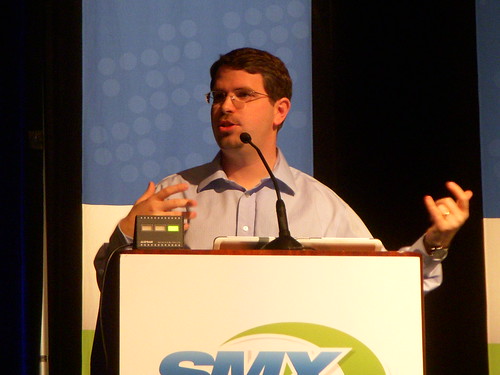
Matt Cutts explains the Canonical Tag at SMX West

This is a really exciting addition to the SEO’s toolbox! Duplicate content often occurs when webmasters accidentally create alternate URLs for the same content across their sites. The larger the site, the more likely it is to have serious duplication issues. This was one of the most difficult issues I used to work upon when I was in charge of SEO for Superpages.com — nearly any site which uses dynamic URLs with querystrings to specify how content is delivered end up with some level of duplication.

Here’s just a few examples of duplicate URLs:

The solution the search engines collaborated upon to solve canonical and duplicate content issues is very straightforward — one can add them within the HEAD tags of a document:

<head>
<link rel=”canonical” value=”http://example.com/page.html”/&gt;

</head>

Matt provided a number of caveats and advance clarifications about use of the tag:

  • It’s a hint to the search engines. Not a directive/mandate/requirement.
  • Far better to avoid dupes and normalize URLs in the first place.
  • If you’re a power user, exhaust alternatives first.
  • Does not work across domains.
  • DOES work across subdomains.
    (The example Matt gave was from Zappos’ new design subdomain: zeta.zappos.com vs. http://www.zappos.com)
  • Pages do not have to be identical.
  • Can one use relative / absolute urls? Yes, but we suggest absolute!
  • Can you follow a chain of canonicals? We may, but don’t count on it.

Matt added a further disclaimer about how search engines may not be able to handle some extreme cases, so don’t push the envelope too much. He said:

  • Point to a 404?
  • Or create an infinite loop?
  • Or point to an uncrawled URL?
  • Or www/non-www conflict?
  • Search engines will do the best they can.

Then, he jokingly quoted Ghostbusters in context to this: “Don’t cross the beams!”

"Don't Cross the Beams!" Ghostbusters

This whole protocol is really interesting and a great tool for webmasters to use. However, the caveats and strong suggestion that webmasters try to fix duplication content issues before resorting to this canonical tag would make me prefer to try to solve such problems instead of using this. It’s good to have the option, though!

Here’s the top announcement articles about this Canonical Tag protocol:

Vint Cerf Keynote at SMX West

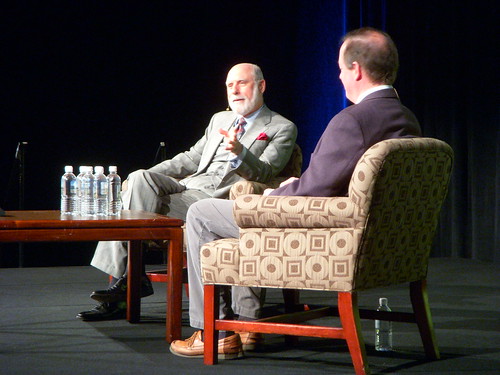
Chris Sherman interviewed Google’s Chief Internet Evangelist and VP, Vint Cerf in a very interesting keynote interview this morning at the SMX West conference in Santa Clara.

Vint Cerf & Chris Sherman at SMX Keynote

Subjects touched upon included Cerf’s work on the Interplanetary Internet with NASA. It is a new standard to communicate from planet to planet, using radio/laser communications that are highly tolerant to signal degradation.

Cerf also talked about search marketing, the tolerance/intolerance of users to advertising, and the high level of importance that Google places upon internet privacy.

It was a very interesting session!

KeyRelevance Search Marketing Professionals Share Expertise at SMX West

SMX West Conference SpeakerKeyRelevance is honored to have two members of their online marketing team presenting in four sessions at the Search Marketing Expo (SMX) West Conference in Santa Clara California February 10-12, 2009.

KeyRelevance President Christine Churchill will take the podium on the first day of the conference in a solo presentation entitled SMX Boot Camp: Keyword Research Tools and Techniques. “Keyword research is the critical first step in any online marketing endeavor. Keyword research can make or break a company’s success in online marketing,” states Christine.

During the keyword session, Christine will be providing insider tips on how to conduct keyword research, a review of keyword tools, as well as the best ways to evaluate keywords. She will also be demonstrating advanced techniques for extracting vital information out of keyword tools.

“Today’s economy demands that online marketers know exactly which keyword phrases produce the best results,” Christine explained. “Now more than ever, smart marketers need to arm themselves with sound keyword research to make better marketing decisions.”

The SMX Boot Camp sessions offered at SMX West are designed as teaching sessions for attendees who desire to get a better foundation for search marketing. During the conference, there will be five Boot Camp sessions covering different components of online marketing including Keyword Research, Copywriting, Paid Search, Link building and Search Engine Friendly Design. Attendees who complete all five Boot Camp Sessions will receive a Certificate of Completion signed by Search Industry Guru Danny Sullivan.

Christine will also be presenting on the Advanced Keyword Research Tactics panel. In this session, Christine will be exploring ways for companies to intelligently pursue the long tail strategy of keywords and additional keyword tools. Also on the Advanced Keyword Research panel are Marty Weintraub, President of aimClear and Bryson Meunier of Resolution Media. Gordon Hotchkiss will be providing insights and order as moderator of the session.

Key Relevance’s Director of Optimization Strategies, Chris “Silver” Smith, will be a featured speaker at the conference on two sessions. Chris will be demonstrating local optimization techniques in the “Up Close with Google Maps & Local” session on the first day. Chris will also be demonstrating image optimization techniques in the “Tapping into Image Search” session on day two.

If you haven’t registered for SMX West, you can sign up at http://www.searchmarketingexpo.com/west. If you attend, come with questions in mind that you would like to have answered, and make sure to introduce yourself to others. Look over the Agenda and plan ahead on which of the sessions you would like to attend – most sessions have a question and answer session, and there will be ample opportunities to talk with experts in the Conference halls and many networking activities planned with the conference.