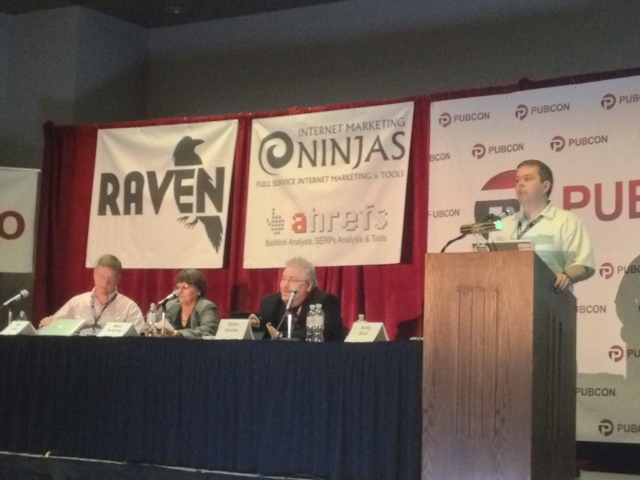
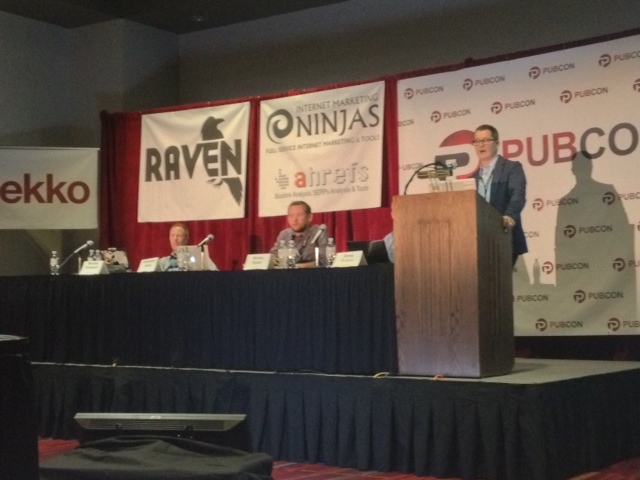
Bing Search Engine Launch & SMX Advanced Conference 2009

Christine Churchill and I from KeyRelevance are attending this year’s SMX Advanced in Seattle where Microsoft has really pushed to promote their new search engine vision, Bing.

Bing

Microsoft officially launched Bing (tagline “The Sound of Found”) this week, with a number of promotional spots intended to coincide with SMX Advanced to take advantage of the presence of so many search-industry wags who blog and the influential search marketers attend the conference.

DSCN9528Microsoft’s reportedly intending to spend over $100 million in advertising and marketing on Bing, and the launch party, dubbed “Bing presents In The Park 2009″, was virtually a return to the days of launch party excess predating the dot-bombs. The event, open to all attendees of SMX, was held in the Olympic Sculpture Park on the water front of Puget Sound and featured loud music, brief acts by weird performance artists, glowing Bing ice-cubes in free-flowing drinks, free nibbles, t-shirt giveaways, and a great view over the water.

I was privileged to have dinner just before the launch party with an old friend of mine who now does business development for Microsoft, and she later went on to Microsoft’s own internal Bing launch party over at the Fisher Pavilion at the Seattle Center, where news journalists had apparently also been invited for the outside portion of the event. By the time the launch party ended, and I walked back to the hotel along with Chris Sherman and Christine, there was a huge “search beam” light shooting up from the area of Seattle’s Space Needle into the dark night sky. I was completely mystified as to the significance, but it turns out that this was part of the “spectacular light show” that Microsoft engineered below the Space Needle in Seattle Center as part of their big launch.

Light Show for Microsoft Bing Launch PartyThe whole launch extravaganza was slightly marred, perhaps, by poor coordination/communication, since it probably would have been far more beneficial to have combined the Microsoft internal/journalist/press-conference with the SMX party, since the SMX attendees mostly had little idea as to what the light beam signified, and the journalists attending the light show sorta felt the launch hype fell short, since they didn’t get all the benefit of the party buzz and excitement, not to mention the free party food and favors. Never have a big launch without making certain the members of the press have access to drinks!!!

Part of the light show included a big, illuminated version of the Bing logo on the grass in front of the Fisher Pavillion.

The morning after, the SMX conference’s keynote session featured Microsoft’s President of Online Services, Dr. Qi Lu, interviewed by Danny Sullivan.

Lu answered Danny’s Bing questions with aplomb, though his responses were tempered by the knowledge that Microsoft’s past attempts at competitive thrusts against the Google domination of search market share have fallen short. Danny sported a t-shirt he’d apparently had custom-made for the occasion which exclaimed “Bada” across the front a reference to “Bada-BING!”, of course.

Dr. Qi Lu Keynote at SMX Advanced

For many of us at the conference who kicked the tires on Bing, the new search engine didn’t seem all that extraordinary or innovative. With the blended search results and Dr. Lu’s emphasis of improved relevancy work, it was felt by many that the engine features are still somewhat immitative of other players, though it’s perhaps now caught up some and might compete better. I heard some state that Bing was what Live Search should’ve been. More interestingly, I heard an anecdotal mention on Twitter from someone who said that Bing seemed to rank their pages a whole lot better than Live Search.

My take on it is that any search engine and presentation improvements they may have added appear pretty small and incremental thus far. But, their aggressive push to fine-tune the branding with the new name/logo, paired with the advertising and marketing warchest might have a chance of increasing their market share.

We’ll probably be posting more here later from the conference on Christine’s presentation on “Keyword Research Artistry” and my presentation for “Beyond the Usual Link Building”.

After Thoughts of SES New York Guy Kawasaki Keynote & His Twitter Use

Guy Kawasaki - SES NYC Keynote March 2009At this year’s SES in New York City the opening day keynote was Guy Kawasaki. Guy presented a lot of stuff about Twitter. Being a man who’s rather well connected, a thought leader in the marketing world and someone who has decent sense of humor, I found myself rather intrigued by this keynote. It was by far the funniest keynote I’ve attended in a long time, and I think humor goes a long way with me being more open to what a speaker is trying to convey.

Guy’s connections allot him a lot of “first cracks” at tools, websites and services that most “Non-A-List” people don’t have access to, so he gets intimately familiar with the marketing aspects some of these tools could be used for. Now with that being said, is every tool presented to him, or pitched to him make it to his list to present at keynotes? Likely not. The tools he did present actually can be used for some genuine marketing and measuring purposes.

I heard a lot of “grumbling” at SES that Guy Kawasaki is a spammer. “If one of us SEO’s told people to use these tools that way, we’d be fried at the stake“, was one cry minus a pitch fork or two. I found myself disagreeing with this line of thought. When you physically have the choice to follow or unfollow him and even the option to block him as well by very simply clicking a button to not see the spam, I find it hard to call what he does with his Twitter account spam. He does come close to the line with his use of TwitterHawk, but if he uses it truly as he showed the audience where he reviews the tweets before they are sent, then, I really don’t see how that is spam. This is using a tool to help market your message in a unique way.

Tweeting isn’t like searching. With search results, scheming websites are made by the thousands to spam the search engine results and as searchers we don’t have the control like you do in Twitter to just block the result and not see it every again (however, technically you can now with Google’s Search Wiki). With search spam you don’t have the option to “unfollow” like you do in Twitter. If you don’t like what Guy’s tweeting, simply go to his profile and click “unfollow” or “block” and what you call “spam” will cease – “walla!”

There are over 95,000 people following Guy Kawasaki. Apparently those people are finding something of value from the information he and his staff tweet out. We as SEO’s may label his tactics “unethical” or “gray”, but I have a hard time even doing that. I also asked the question on my own twitter, “Is Guy Kawasaki a Spammer or just a Marketer using tools in a unique way”. To my surprise, the opinions came back overwhelmingly that he was a savvy marketer.

I also heard a lot of people making such a fuss about Guy Kawasaki “ghost tweeting”. I took a step back and had to honestly ask myself if it was ghost tweeting if the person readily admits on stage he has people tweeting with him in his account, if he puts it on his profile and readily tweets about it. It’s not ghost tweeting, he’s being transparent, he’s been up front about it for a while now. Would I recommend a client setting off to do what Guy’s doing? Most likely not the same way, again the value to the audience dictates how to work the social media strategy.

Then this morning, Tim O’Reilly was surprised because of the New York Times article that included 2 paragraphs about Guy’s “ghost tweeting“. This particular tweet has been retweeted over and over again. Shock, Drama, Outrage! But why? The man has stated for a while he’s had help with his tweeting, he says he does it to an audience at both SES and SxSW, he has it stated on his Twitter account (also states names of who helps him) after asked to amend it by Dave Fleet, and readily admits it in his tweets when asked. I guess people would like him to add “TRGK” on his tweets for “The Real Guy Kawasaki” for the one’s he tweets? What’s the sense in that – if you don’t like what he and his team tweets – unfollow him.

Then there were outcries that Guy’s a “broadcaster”. I’ve been watching his tweet stream closely. The man (and Guy states it is him who responds, not his team) does interact with his audience, he doesn’t just send out link after link. If it was link after link that truly delineated a spam account from a ‘real’ account, wouldn’t CNN’s account then be considered a spammy twitter account? It’s about the perceived value of the content to the audience. Apparently Guy’s content is valuable to his audience because not only are his followers growing, but look how often he’s ReTweeted. In social media its about the value the end user perceives they are getting, if Guy’s figured out how to give his audience what they want through using tools like Twitterhawk and Adjix, more power too him.

Might some of his tactics float around the “grey” area of marketing and spamming? Perhaps, but I keep going back to those nearly 100k followers who not just speak to him but retweet not just his links but what he says to say they obviously don’t mind, obviously they are seeing value in Guy’s “Spam”. Ironic, no? I think this goes to prove a point that “spam” in Social Media it truly is about the value the end user is getting, not the tactic by which they receive it.

Social Media Optimisation – SES London 2009

being socialAnother panel I presented on at SES London 2009 which took place this past week was Social Media Optimization. I had the fine pleasure of presenting with Jennifer Laycock of Search Engine Guide, Lisa Ditlefsen who’s recently launched her own company Verve Search, and Krista Neher of Marketess. I think it was the only panel at SES that was completely female dominated! Besides that, our panel seemed to flow rather nicely with each of us covering different aspects of social media.

I took the lead in presenting the basics that build social media. From how it rose to be a power that consumers now have, to defining your goals before you start, I covered a basic foundational structure of what social media is. The two main points I really wanted to stress is that 1) it’s all about the end user and 2) social media is a source of new signals about relevancy for the search engines. Beyond covering the basics of strategy and goal setting when it comes to social media, I demonstrated how someone used these aspects with phenomenal success, that person being the new president of the United States, Barack Obama.

Next to the podium was Jennifer Laycock who reinforced my presentation that it’s about the conversations with the end users. From there Jennifer talked about a few social media sites that could be part of any social media strategy. These sites, aren’t bleeding edge, but have been proven performers of where people are having successful conversations with companies. Jennifer started off with Flickr, showing how she effectively utilized it to promote her BentoYum blog. From there Jenn went on to discuss the objectives of successfully using Twitter in your social media marketing strategy. Moving on next Jenn discussed and then rounded it out with an overview of Facebook and LinkedIn with some.

Lisa Ditlefsen then took the approach of “how do you do this” with a look of how you need to do this with your in house team – whether you are an agency or a company. The first thing is that everyone needs to be on the same page, if you aren’t the strategy is going to fail. The idea you are working with also needs to be creative, otherwise its just going to whither away. Resources need to be planned out as well, because if you don’t have enough resources allocated to handle a successful strategy, or you need to switch gears to retool a strategy, your efforts can be for nothing. Lisa then highlighted two social media pieces, SEO Wars – a YouTube video her team put together, and a social media “Fun” piece put together for Rackspace. Some great takeaways were given for both of these.

To round out the panel, Krista Neher presented several different social media pieces that have been widly successful. The main point of her presentation that she drove home is that end users don’t care about your company. Something I couldn’t agree more with. For end users it is about the conversation, the sharing of the exprience. Krista highlighted the Blendtech videos, the Dove campaign for Real Beauty, and a few other very successful social media strategies that took into account the end user first.

Overall I think the panel gave a great overview of what social media is truly about, having been on the panel lasty year, a lot has changed and this was a really good well rounded view of how it has truly become a very strong online marketing channel to be strategized for.

KeyRelevance Supports Dallas Keyword Research Event

DFWSEM logoKeyRelevance President Christine Churchill is teaming with Shelly Ellis to provide a presentation on keyword research. The event will be held at the Renaissance Hotel in Richardson, Texas at 6:30 PM on 19 February.

Keyword Research is considered the first step in all online marketing. Keyword research applies to organic search engine optimization, paid advertising, as well as video marketing, blogging and social media marketing.

Christine Churchill currently serves as the Chairman of the Dallas Search Engine Marketing Association (DFWSEM) and frequently speaks on keyword research at major search industry conferences such as Search Marketing Expo, Search Engine Strategies, Webmaster World, and the Unleashed Conferences. She has been in the field of online marketing for over ten years and holds a masters degree in business.

Shelley Ellis is the owner of Shelley Ellis Consulting and is at the forefront of exploring the vast potential of using Google’s content network for tapping into online conversations to increase sales and boost profits for companies of any size. With over nine years of paid search experience across a variety of industries, Shelley is a pioneer and a recognized expert in advanced content targeting strategies. Shelley also serves on the board of the Dallas-Fort Worth Search Engine Marketing Association (DFWSEM).

If you’re in Dallas on 19 Feb, please join us at the Keyword Research Event. For additional information on the DFWSEM see, http://www.dfwsem.org.

Duplication Solution Announced With Canonical Tag

Google, Yahoo! and Microsoft announced a joint agreement today at the SMX West conference in Santa Clara to support a new protocol which is intended to assist webmasters in reducing duplicate content issues on websites. All three are issuing blog postings about this, and Matt Cutts presented the new protocol in a session just a few minutes ago at SMX.

Matt Cutts explains the Canonical Tag at SMX West

This is a really exciting addition to the SEO’s toolbox! Duplicate content often occurs when webmasters accidentally create alternate URLs for the same content across their sites. The larger the site, the more likely it is to have serious duplication issues. This was one of the most difficult issues I used to work upon when I was in charge of SEO for Superpages.com — nearly any site which uses dynamic URLs with querystrings to specify how content is delivered end up with some level of duplication.

Here’s just a few examples of duplicate URLs:

The solution the search engines collaborated upon to solve canonical and duplicate content issues is very straightforward — one can add them within the HEAD tags of a document:

<head>
<link rel=”canonical” value=”http://example.com/page.html”/&gt;

</head>

Matt provided a number of caveats and advance clarifications about use of the tag:

  • It’s a hint to the search engines. Not a directive/mandate/requirement.
  • Far better to avoid dupes and normalize URLs in the first place.
  • If you’re a power user, exhaust alternatives first.
  • Does not work across domains.
  • DOES work across subdomains.
    (The example Matt gave was from Zappos’ new design subdomain: zeta.zappos.com vs. http://www.zappos.com)
  • Pages do not have to be identical.
  • Can one use relative / absolute urls? Yes, but we suggest absolute!
  • Can you follow a chain of canonicals? We may, but don’t count on it.

Matt added a further disclaimer about how search engines may not be able to handle some extreme cases, so don’t push the envelope too much. He said:

  • Point to a 404?
  • Or create an infinite loop?
  • Or point to an uncrawled URL?
  • Or www/non-www conflict?
  • Search engines will do the best they can.

Then, he jokingly quoted Ghostbusters in context to this: “Don’t cross the beams!”

"Don't Cross the Beams!" Ghostbusters

This whole protocol is really interesting and a great tool for webmasters to use. However, the caveats and strong suggestion that webmasters try to fix duplication content issues before resorting to this canonical tag would make me prefer to try to solve such problems instead of using this. It’s good to have the option, though!

Here’s the top announcement articles about this Canonical Tag protocol:

Vint Cerf Keynote at SMX West

Chris Sherman interviewed Google’s Chief Internet Evangelist and VP, Vint Cerf in a very interesting keynote interview this morning at the SMX West conference in Santa Clara.

Vint Cerf & Chris Sherman at SMX Keynote

Subjects touched upon included Cerf’s work on the Interplanetary Internet with NASA. It is a new standard to communicate from planet to planet, using radio/laser communications that are highly tolerant to signal degradation.

Cerf also talked about search marketing, the tolerance/intolerance of users to advertising, and the high level of importance that Google places upon internet privacy.

It was a very interesting session!

KeyRelevance Search Marketing Professionals Share Expertise at SMX West

SMX West Conference SpeakerKeyRelevance is honored to have two members of their online marketing team presenting in four sessions at the Search Marketing Expo (SMX) West Conference in Santa Clara California February 10-12, 2009.

KeyRelevance President Christine Churchill will take the podium on the first day of the conference in a solo presentation entitled SMX Boot Camp: Keyword Research Tools and Techniques. “Keyword research is the critical first step in any online marketing endeavor. Keyword research can make or break a company’s success in online marketing,” states Christine.

During the keyword session, Christine will be providing insider tips on how to conduct keyword research, a review of keyword tools, as well as the best ways to evaluate keywords. She will also be demonstrating advanced techniques for extracting vital information out of keyword tools.

“Today’s economy demands that online marketers know exactly which keyword phrases produce the best results,” Christine explained. “Now more than ever, smart marketers need to arm themselves with sound keyword research to make better marketing decisions.”

The SMX Boot Camp sessions offered at SMX West are designed as teaching sessions for attendees who desire to get a better foundation for search marketing. During the conference, there will be five Boot Camp sessions covering different components of online marketing including Keyword Research, Copywriting, Paid Search, Link building and Search Engine Friendly Design. Attendees who complete all five Boot Camp Sessions will receive a Certificate of Completion signed by Search Industry Guru Danny Sullivan.

Christine will also be presenting on the Advanced Keyword Research Tactics panel. In this session, Christine will be exploring ways for companies to intelligently pursue the long tail strategy of keywords and additional keyword tools. Also on the Advanced Keyword Research panel are Marty Weintraub, President of aimClear and Bryson Meunier of Resolution Media. Gordon Hotchkiss will be providing insights and order as moderator of the session.

Key Relevance’s Director of Optimization Strategies, Chris “Silver” Smith, will be a featured speaker at the conference on two sessions. Chris will be demonstrating local optimization techniques in the “Up Close with Google Maps & Local” session on the first day. Chris will also be demonstrating image optimization techniques in the “Tapping into Image Search” session on day two.

If you haven’t registered for SMX West, you can sign up at http://www.searchmarketingexpo.com/west. If you attend, come with questions in mind that you would like to have answered, and make sure to introduce yourself to others. Look over the Agenda and plan ahead on which of the sessions you would like to attend – most sessions have a question and answer session, and there will be ample opportunities to talk with experts in the Conference halls and many networking activities planned with the conference.

Glad to Join KeyRelevance!

Hi, folx! I’m Chris Silver Smith, and I’ve just joined KeyRelevance as their new Director of Optimization Strategies. I thought I’d provide a brief post here on the group blog to introduce myself.

I previously worked for Netconcepts on development and management of their automated search optimization software, and while there I also provided search marketing consulting for some of the top Internet Retailer 500 brands as well as other Fortune 500 company sites.

Prior to that, I was head of the technology department for Verizon’s (now spun off as “Idearc”) Superpages.com where I headed up teams that worked upon taxonomy, map based search development, mobile applications, city guides, weather systems, RSS and APIs, and more. I worked there for over a decade and have around five patents pending for some of that work, involving local search and user-interface technologies.

I’ve worked in search engine optimization from the very early days to present, and I really enjoy it. I used to play with Rubik’s cubes when I was growing up, and SEO work often feels like I’m still solving puzzles, only I now get paid to do it!

I’m looking forward to working with the folx at KeyRelevance I’ve known both Christine and Li from the search marketing conference circuit, and I’ve always been impressed with the level of expertise combined with ethical commitment I’ve seen with this firm.

Anyways, greetings to all of you regular readers of this blog as well as past, present and potential future clients! We have a very strong team of experts here who all have a dedication to providing a high quality of work I look forward to working with you, and to providing some occasional observations and search marketing advice through this group blog.

Key Relevance Review of eMetrics: Hotels.com’s Joe Megibow Keynote

Joe Megibow of Hotels.com - eMetrics KeynoteI don’t know if I’ve ever seen a keynote be so insightful and revealing about a major internet website as I did when I attended Joe Megibow’s Keynote at the eMetrics Marketing Optimization Summit in Washington DC. Joe is from Hotels.com and the audience was certainly treated to some great insight into listening to the voice of a customer as well as testing and being fanatical about “getting it right”.

Hotels.com is quickly approaching its 1 millionth user review. Through reviews and feedback they have learned to both listen and learn to provide what their customer really want, not what what they think their customers need.

Two years ago, Hotels.com was at a crossroads, they were known as the “low cost, cheap operator”, but they wanted to be more. At the beginning of 2008 they launched a re-branding which included re-branding their website. A few weeks ago, they relaunched their search engine which is faster and easier for customer to use.

Hotels.com does a lot of analytics through Ominiture. They are fanatical, analytics drives almost everything on their site. However, over the last year they wanted to listen to their customers a little more, but they really had no context. Their good sales were masking the problems that were really happening on the site, so they needed to find another way. They combined “voice of the customer” with analytics in a usable way.

They installed OpinionLab, they got a lot of feedback. What’s even more important, every OpinionLab entry is tied to TeaLeaf. They also installed over 700 phone numbers so that they can measure all of the channels that sales and feedback comes from. All of this transforms Hotels.com.

Executives at Hotels.com get feedback everyday, and they use it, they read it. They click on what happens in different issues watch it in TeaLeaf and send their own feedback to the different teams within Hotels.com. Everybody has buy in to fix things on Hotels.com. They’ve acted on 200 site conversion issues over the last 6 months. The thing to remember is that mistakes are common, everyone has them. But not everyone realizes they have them and on top of that not everyone acts upon their mistakes to correct them.

They had issues with logins. They thought they only had 2 ways to login, but through the customer feedback and watching the sessions being replayed in TeaLeaf, they were able to see that they actually had a third way to login that they never realized they had. This third way was what was creating a big problem. Because of this they added a “book without registering” option. Immediately half of all the customers chose this option!

Hotels.com realized by installing the “book without registering” option, they were making it hard for their customers to book. Not only that, customers were not getting any kind of value out of registering with their site. There was a disconnect between how the marketers were thinking about customer conversion. They really needed to give customer a reason to register, a reason to care about their accounts. They introduced – book 10 nights, get 1 night free – “the loyalty program that doesn’t require too much loyalty”.

Joe Megibow of Hotels.com - eMetrics KeynoteThe loyalty program exposed issues they didn’t realize that they had. A customer had an issue with logging in. Joe called her and talked to in detail about what happened. He actually turned her into a fan of Hotels.com. But from the conversation Joe also gained valuable insight, apparently something was happening with the loyalty program after booking many nights and getting a bunch of free nights. A certain field was getting wiped out. They looked into this and found thousands of profiles with the same issue and as time was going on, it was getting worse. They fixed the issue within a week.

Customers do not repeatedly make this stuff up. They were getting random reports of issues of their Terms of Service. It was not allowing users to accept it no matter what they tried. It was about 1 person a day, but they were having trouble recreating the problem. When they started looking deeper, they found 40-50 people a day were having this problem, and it had to do with IE. It took a few months of investigating but they fixed it, and now that issues gone and 40-50 more people are converting and booking.

Minor updates can create major issues! One of their updates created issues with the SSL and how cookies were handle. People browse in different ways, a lot of people use the back button. Apparently a lot more than they realized, combine that with the fact they use 4 different servers to service up Hotels.com, when customer were backing out of the SSL are to regular HTML pages, the update was dropping their cookies, and then they had a 1 in 4 chance of getting back to where their were before, if they didn’t hit the right server, their information was dropped. This was very frustrating to their customers, they listened, they used TeaLeaf and corrected it.

Hotels.com is fanatical about getting this stuff right. Everyone inside Hotels.com is dedicated to it. Internally they have people just wanting to create mashups, tools and applications to help them make it easier to listen to the customer and fix things that aren’t working right. They built an in-house iPhone application for monitoring the Voice of the Customer since most of their staff was on the iPhone. Over the past months, they’ve seen a substantial increase in conversion because of their efforts. They’ve created a ton of good will and they are winning the cultural shift within Hotels.com internally of doing good by the customer.

eMetrics: Google Analytics 6 New Features & Improvements

I think Google’s outdone itself here. Seriously!

I already had a sneak peak this morning at something I knew Google Analytics was changing. I figured “that” was the announcement at the 2 p.m. special session in the ballroom here at eMetrics Marketing Optimzation Summit. Early this morning, I was surprised to run into my friend Avinash Kaushik in front of the WAA booth, because he told me back in August he wouldn’t be here at eMetrics. I had a feeling something “big” was onhand.

I mentioned to Avinash, about the change and asked if that was the announcement. He smiled in his “coy” way and just said “Li, make sure you are in the ballroom at 2!” Needless to say, Avinash doesn’t have to say anything to me twice, I get it. So I was there.

Not 1, not 2, not even 3 features or improvements, they announced 6!

So here’s a quick rundown:
1. Interface changes
2. Adsense Integration
3. Visualization Charts (these are way cool looking)
4. Custom Reports
5. Segmentation
6. API! (this got huge cheers from the audience)

I’ve got video on three of the announcements, I’m working on getting them up to the web, so you can hear Avinash explain it in his own words.